- A vector field over a plane region R is a function F that assigns a vector F(x,y) to each point in R.
- A vector field over a solid region Q in space is a function F that assigns a vector F(x,y,z) to each point in Q.
One web site
Second site
Third (3d) site, but I have not figured it out
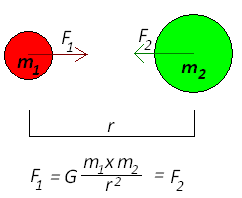
Returning to having the two points located in a coordinate system, the point `(x,y,z)` exists at the end of the vector, in standard position, `bbr=xbbi+ybbj+zbbk`. Thus the value `(x^2+y^2+z^2)` can be expressed as `||bbr||^2` and `bbu` can be expressed as `bbr/(||bbr||)`, which means that we can rewrite the equation as `F(x,y,z)=(-Gm_1m_2)/(||bbr||^2)((bbr)/(||bbr||))`.
`F(x,y,z) = (cq_1q_2)/(||bbr||^2) bbu`.
`bbr(t) = x(t)bbi + y(t)bbj + z(t)bbk`,
`bbF(x,y,z) = (k)/(||bbr||^2) bbu`, where `k` is a real number and `bbu = (bbr)/(||bbr||)` is a unit vector in the direction of `bbr`
Let `M` and `N` have continuous first partial derivatives on an open disk `R`. The vector field given by `bbf(x,y) = Mbbi +Nbbj` is conservative if and only if `(del N)/(del x) = (del M)/(del y)`
The curl of `bbF(x,y,z) = Mbbi +Nbbj + Pbbk` is
`curl\quad bbF(x,y,z) = grad xx bbF(x,y,z)`
`curl \quad bbF(x,y,z) = ( (del P)/(del y) - (del N)/(del z))bbi - ( (del P)/(del x) - (del M)/(del z))bbj + ( (del N)/(del x) - (del M)/(del y))bbk`
Note that we seem to be looking at the cross product (`xx`) of two vectors
when we write `grad xx bbF(x,y,z)`. If we go back to the definition of `grad`
and we think of it as the differential operator so: `grad = del/(del x)bbi +del/(del y)bbj + del/(del z)bbk`
and given that `bbF(x,y,z)=Mbbi +Nbbj+Pbbk`, then it does look line we have two
vectors and we recall that we could write the cross product of two vectors in determinant form as:
`grad xx bbF(x,y,z) = |[bbi,bbj,bbk],[del/(del x),del/(del y),del/(del z)],[M,N,P]|`, so
`grad xx bbF(x,y,z) = ( (del P)/(del y) - (del N)/(del z))bbi - ( (del P)/(del x) - (del M)/(del z))bbj + ( (del N)/(del x) - (del M)/(del y))bbk`
Also note that if we had done a simialar thing for the two variable situation then we might have looked at `|[del/(del x),del/(del y)],[M,N]|` as producing `(del N)/(del x) - (del M)/(del y)` and if that is set to 0 that is the same as saying `(del N)/(del x) = (del M)/(del y)`.
Suppose that `M`, `N`, and `P` have continuous first partial derivatives in an open sphere `Q` in space. The vector field given by `bbF(x,y,z) = Mbbi +Nbbj+Pbbk` is conservative if and only if `curl\quad bbF(x,y,z) = bb0`, and that is equivalent to having `(del P)/(del y) = (del N)/(del z )`, `(del P)/(del x) = (del M)/(del z )`, and `(del N)/(del x) = (del M)/(del y )`.
- The divergence of `bbF(x,y) = Mbbi + Nbbj` is
`div bbF(x,y) = grad • bbF(x,y) = (del M)/(del x) + (del N)/(del y)`
- The divergence of `bbF(x,y,z) = Mbbi + Nbbj + Pbbk` is
`div bbF(x,y,z) = grad • bbF(x,y,z) = (del M)/(del x) + (del N)/(del y) + (del P)/(del z)`
- If `div bbF = 0 ` then `bbF` is said to be divergence free.
If `F(x,y,z) = Mbbi + Nbbj + Pbbk` is a vector field and `M, N, "and" P` have continuous second partial derivatives, then
`div(curl bbF) = 0`.